
What Is an EIN, and Does a Freelancer Actually Need One?
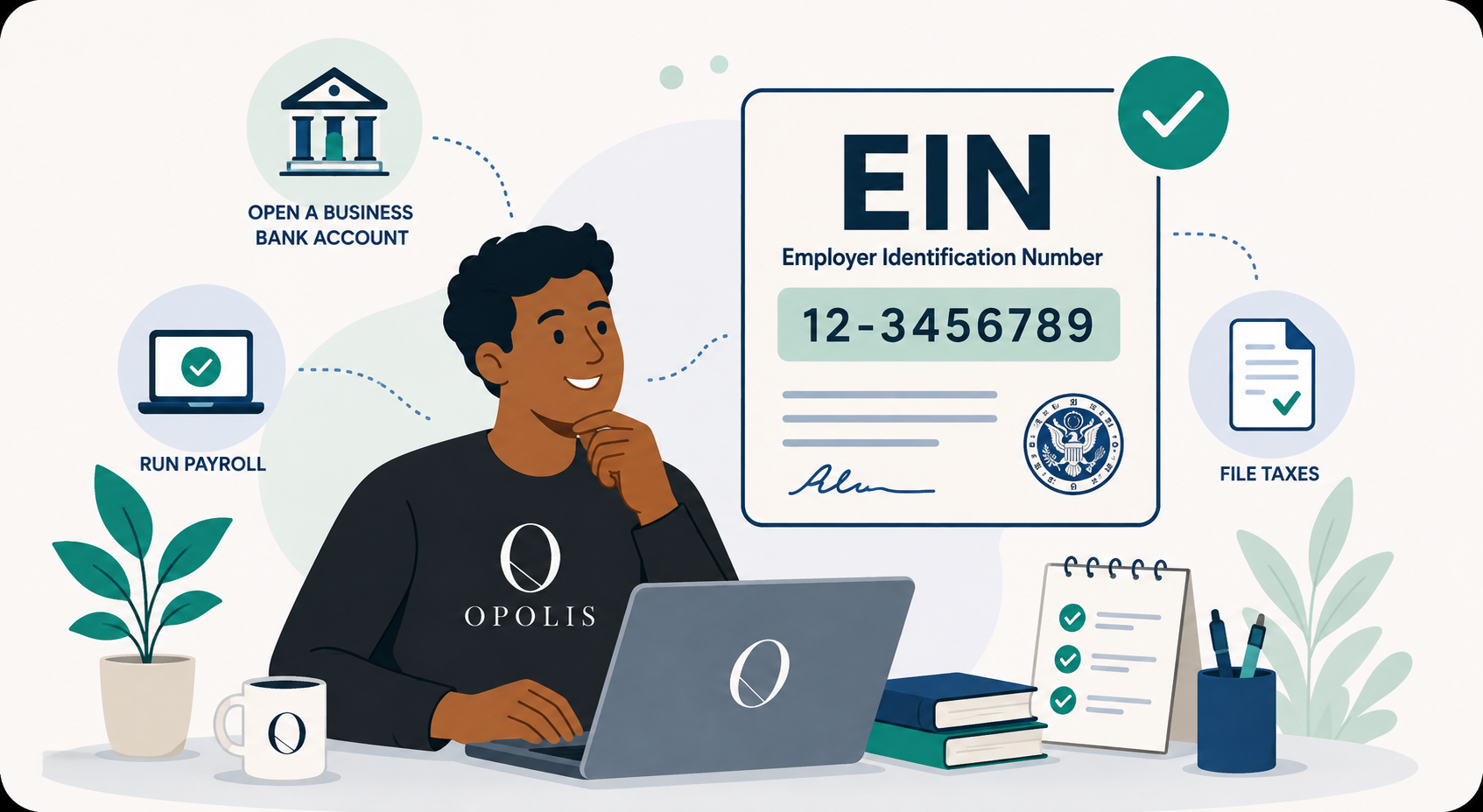
Short answer: an EIN, or Employer Identification Number, is a nine-digit number the IRS assigns to a business so it can be identified for tax purposes, kind of like a Social Security number but for your company instead of you. If you run an LLC, S-Corp, or C-Corp, you'll almost always need one. If you're a sole proprietor, you might not, but there are good reasons to get one anyway. It's free, it takes about ten minutes, and you get it straight from the IRS with no middleman required.
That's the quick version. Here's the fuller picture, especially if you're a freelancer trying to figure out whether this actually applies to you.
Who actually needs one
If you've formed an LLC, S-Corp, or C-Corp, you need an EIN. Full stop. Corporations and most LLCs can't file taxes, open a business bank account, or run payroll without one. This is a natural next step once you've landed on a structure, and if you're still weighing LLC vs. S-Corp vs. C-Corp, that's worth sorting out first since it changes what you need the EIN for.
Sole proprietors are the gray area. Technically, if you have no employees and don't file certain excise or pension plan taxes, the IRS lets you use your Social Security number instead. But most freelancers end up wanting an EIN anyway for a few reasons: it keeps your SSN off client paperwork and 1099 forms, it's usually required to open a business bank account, and it makes you look like an established business instead of a side hustle. If you're weighing whether to stay a sole proprietor or formalize, our piece on sole proprietor vs. LLC walks through that decision.
One question that comes up a lot: "I'm the only person at my company, do I still need an EIN?" Yes, if you've formed an entity. The EIN belongs to the business, not to any employees it might eventually have. A single-member LLC or a one-person S-Corp still needs its own EIN separate from your personal SSN.
How to actually get one
Here's the part that trips people up: getting an EIN is free, and you get it directly from the IRS. You do not need to pay a service to do this for you. The official process is:
Go to the IRS's EIN application page
Confirm you have a valid Taxpayer ID (usually your SSN) and your business is already formed
Fill out the online application, which takes most people under 15 minutes
Get your EIN immediately upon completion, no waiting period
A lot of "EIN filing services" charge $50 to $300 for something you could do yourself for free in the time it takes to grab a coffee. That's not to say every paid service is a scam; some bundle it with other formation paperwork, but if all you need is the EIN itself, go straight to the source.
When your EIN starts to matter for real
Once you've got your EIN, it becomes the backbone of a lot of what comes next: opening your business bank account, filing your S-Corp election with the IRS if that's the route you're taking, and setting up payroll. This is usually the point where freelancers running their own S-Corp or C-Corp start looking for a way to handle W-2 payroll, benefits, and tax compliance without building it all themselves, which is exactly what Opolis does as a member-owned employment cooperative and Employer of Record.
If you're a new business owner figuring out what comes after formation, your EIN and your payroll setup tend to land on your to-do list around the same time, and it's worth looking at how payroll actually works for new freelancers before you're knee-deep in it.
It also comes up early with your accountant. If you're working with a CPA, or thinking about it, pairing a good CPA with Opolis is a common combo once your EIN and entity are both in place, since your CPA handles the strategy side and Opolis handles the payroll and compliance mechanics. And once payroll is running, your EIN shows up again when you're sorting out deductible expenses as a self-employed business owner, since that's tied to the same business entity your EIN represents.
Curious about the legal side of formalizing beyond just the EIN? We've also covered the broader set of legal considerations freelancers should have on their radar.
FAQ
Do I need an EIN if I'm a sole proprietor?
Not always. If you have no employees and don't file certain federal excise or pension taxes, you can often use your SSN instead. Many sole proprietors get one anyway to separate business and personal finances.
What's the difference between an EIN and my SSN?
Your SSN identifies you as an individual. Your EIN identifies your business as a separate entity for tax purposes. If you've formed an LLC, S-Corp, or C-Corp, that entity needs its own EIN.
Does it cost anything to get an EIN?
No. The IRS issues EINs for free. If a site is charging you for one, you're likely paying for a bundled formation service, not the EIN itself.
How long does it take to get an EIN?
If you apply online directly through the IRS, you get your EIN immediately after completing the application.
Do I need an EIN before I can run payroll?
Yes. Payroll, whether you're running it yourself or through an Employer of Record like Opolis, requires your business to have an EIN first. It's one of the first things you'll need if you're getting set up on Opolis.
For more common questions, check out our full FAQ page.